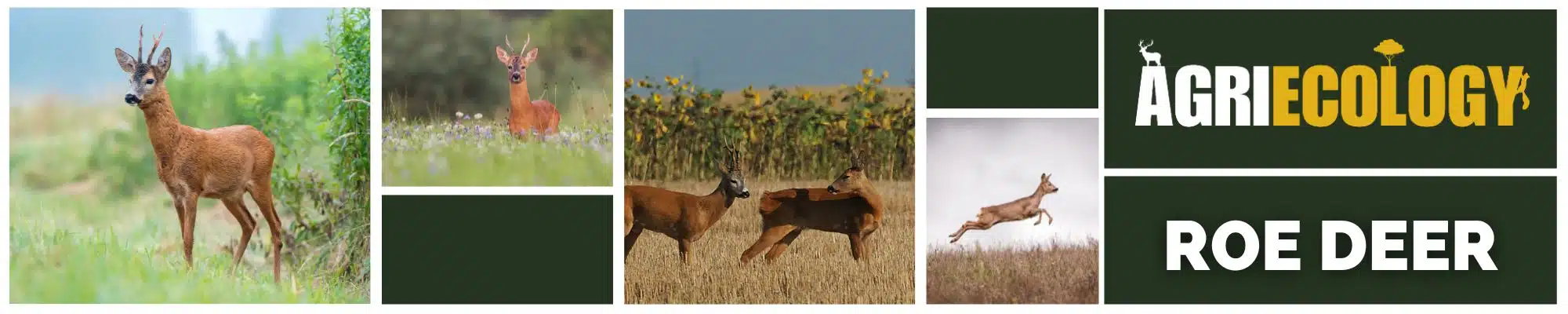
The Roe Buck rut is the mating season for Roe deer (Capreolus capreolus), a native species of deer found throughout the UK. This period is marked by increased activity and behaviours as bucks compete for the opportunity to mate with does. Here are some key characteristics of the roe buck rut.
April – July is when deer managers and stalkers should manage Roe buck numbers, these culls ensure Roe doe’s are not over dominated and bucks in poor condition or with malformed antlers are removed from the population, this management process encourages a healthier Roe deer population.
AgriEcology specialise in Deer management and culls, this process is performed to support our fragile environment and the overall health of the deer population.
Timing
- Season: The Roe buck rut occurs in the summer, peaking in late July and early August.
- Duration: The rut lasts for several weeks, with activity increasing during the peak periods.
Behaviour’s
- Territory: Bucks establish and will defend their territories using scent marking and physical displays. Roe bucks will rub their antlers against trees and shrubs to leave scent marks from glands on their heads. This process can strip bark and damage trees.
- Antler Clashes: Bucks engage in antler clashes, this process is known as rutting battles, to assert dominance and win mating rights and territory. These battles can be intense but are rarely fatal. Bucks with malformed antlers may be at a disadvantage, some bucks are known as “murder bucks” this is when a buck has a single tine, no back or brow tines these can act like a daggers puncturing deep into the opponent causing significant injury or death. Now is the last opportunity to cull these murder bucks to protect other deer.
- Vocalisations: Bucks make various vocalisations, including grunts and barks, to call in does and challenge other bucks.
- Chasing: Bucks actively chase doe’s during the rut, attempting to court and mate with them. This can often exhaust both animals.
Significance
- Reproduction: The primary purpose of the rut is reproduction. The successful bucks will get the opportunity to mate and pass on their genes.
- Natural Balance: The rut plays a critical role in maintaining the population dynamics and genetic diversity of roe deer.
- Observation Opportunities: The rut offers unique opportunities to observe and document the behaviour of roe deer in their natural habitat.
Conservation
- Habitat Preservation: Ensuring the preservation of our natural habitats is essential for supporting roe deer populations and the continuation of natural behaviours like the rut.
The roe buck rut is a fascinating display of natural behaviour and often invokes feelings for those lucky enough to witness it, the Roe rut showcases the complexities of wildlife interactions and the rhythms of our natural world.