Wildlife Population Counts – Protecting and understanding Our Ecosystems
Accurate data of wildlife populations is essential for effective ecosystem management, conservation and sustainable pest management.
The information we generate from these surveys will allow us to make informed decisions about any future conservation projects or pest management treatments.
Once a survey in complete our customer will be presented with a detailed wildlife survey report.
AgriEcology are leading the way in wildlife surveys utilising several methods of data collection.
- Direct Observation:
- Transect Surveys: AgriEcology surveyors walk or drive along predefined, woodlands, plantations, tracks, arable and grasslands and count animals seen or heard. This method is often used for birds, large mammals, and other easily detectable species.
- Damage observation: Visual inspections of pest damage will help us develop a greater understanding of the environmental impacts, this may include digging, burrowing, fraying, browsing, tree ringing , predatory activities and crop damage.
- Point Counts: AgriEcology observers remain at fixed points (like a high seat or hide) and record wildlife detected within a certain area. This method is commonly used for birds, mammals and pest species.
- Camera Traps:
- Live view camera traps: Our 360 degree cameras offer a 4k view of passing wildlife when placed in strategic locations, these adaptable video and photo cameras capture images or videos during the day or at night. This method is useful for nocturnal species and can provide data on species presence, sex, behaviour, health and relative abundance.
- Aerial Surveys:
- Thermal and daytime drones: AgriEcology count animals from the air covering large or inaccessible areas. This method of data collection is effective for large mammals in open habitats, such as deer, rabbits, foxes and badgers.
- Thermal drones: Our thermal drone can locate and track wildlife from over 1220 meters away, this method of wildlife data collection can monitor wildlife without them been aware of our presence while covering large areas of land in a short period of time. Our thermal drone will record or photograph targeted wildlife to develop our population counts.
- Day time drone: AgriEcology utilise our drones 4k camera to capture footage of pest damage and wildlife activity. This method of information collection will further our understanding of wildlife activity and environmental impacts.
- Environmental Management:
- Understanding population trends helps our AgriEcology team to prioritise conservation measures, protect endangered species, and manage habitats through environmental management projects or pest and predator control.
- Data on population density and trends inform our team on habitat restoration, species reintroduction, and legal protections.
- Ecosystem Health:
- Wildlife populations are great indicators of ecosystem health. Small changes in population sizes can signal environmental changes and habitat degradation.
- Monitoring wildlife populations help us detect the effects of overpopulation, invasive species, and disease outbreaks.
- Sustainable Use:
- For species that are culled or managed, population counts ensure sustainable management plans are successfully completed.
- Managing deer species, game animals, and other resources relies on accurate population data.
- Human-Wildlife Conflict:
- Poaching activity can play a significant role in wildlife management, AgriEcology are experienced in mitigating poaching activity through physical barriers, live camera monitoring and a good working relationship with the police.
- Understanding population dynamics can help balance wildlife conservation within agricultural and urban environments.
Wildlife population counts are critical for:
- Conservation Management: Protecting threatened species and managing habitats.
- Ecosystem Health: Monitoring signs of environmental changes and ecosystem health.
- Sustainable control: Ensuring the sustainable management of resources like deer, game and pest species.
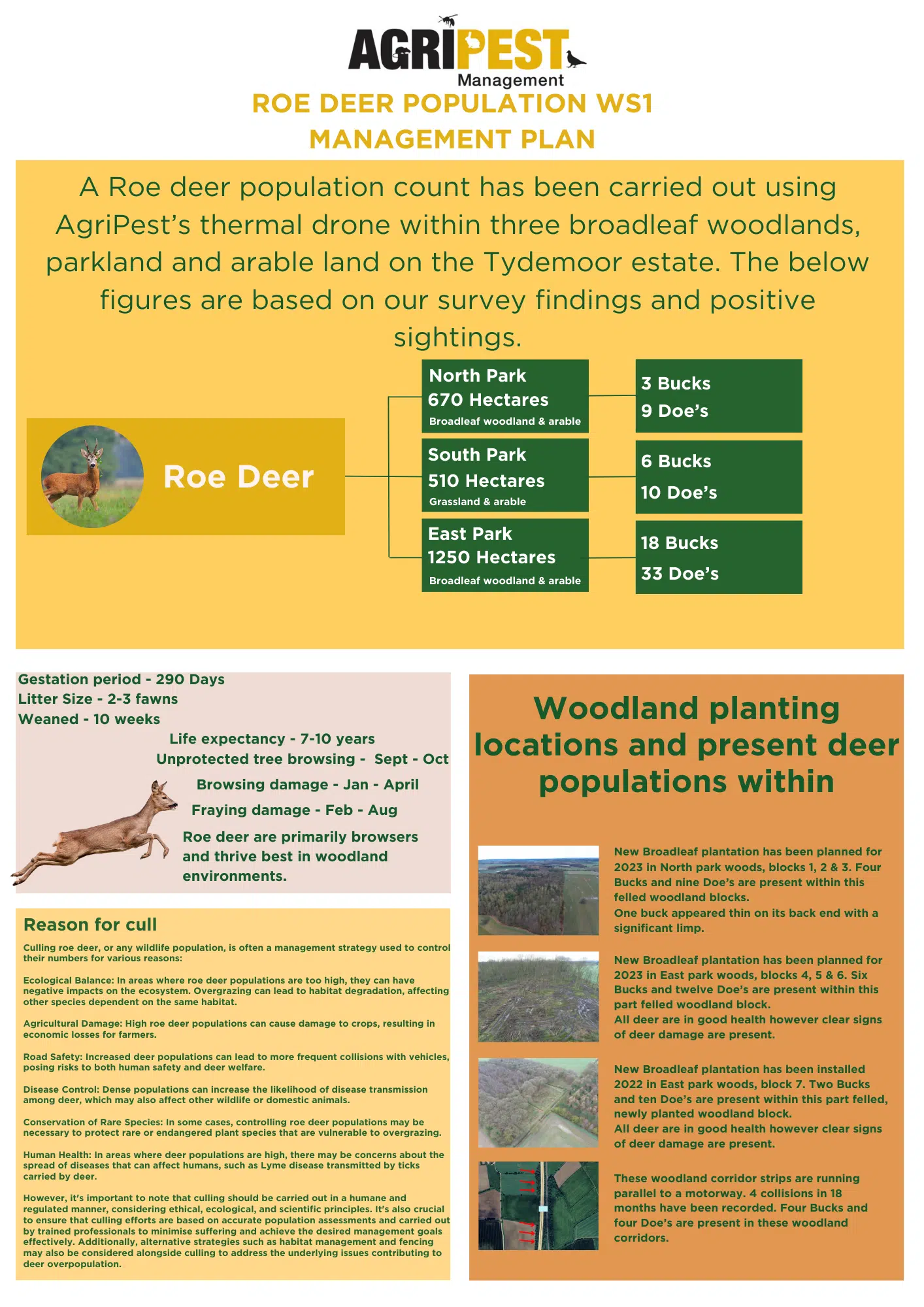
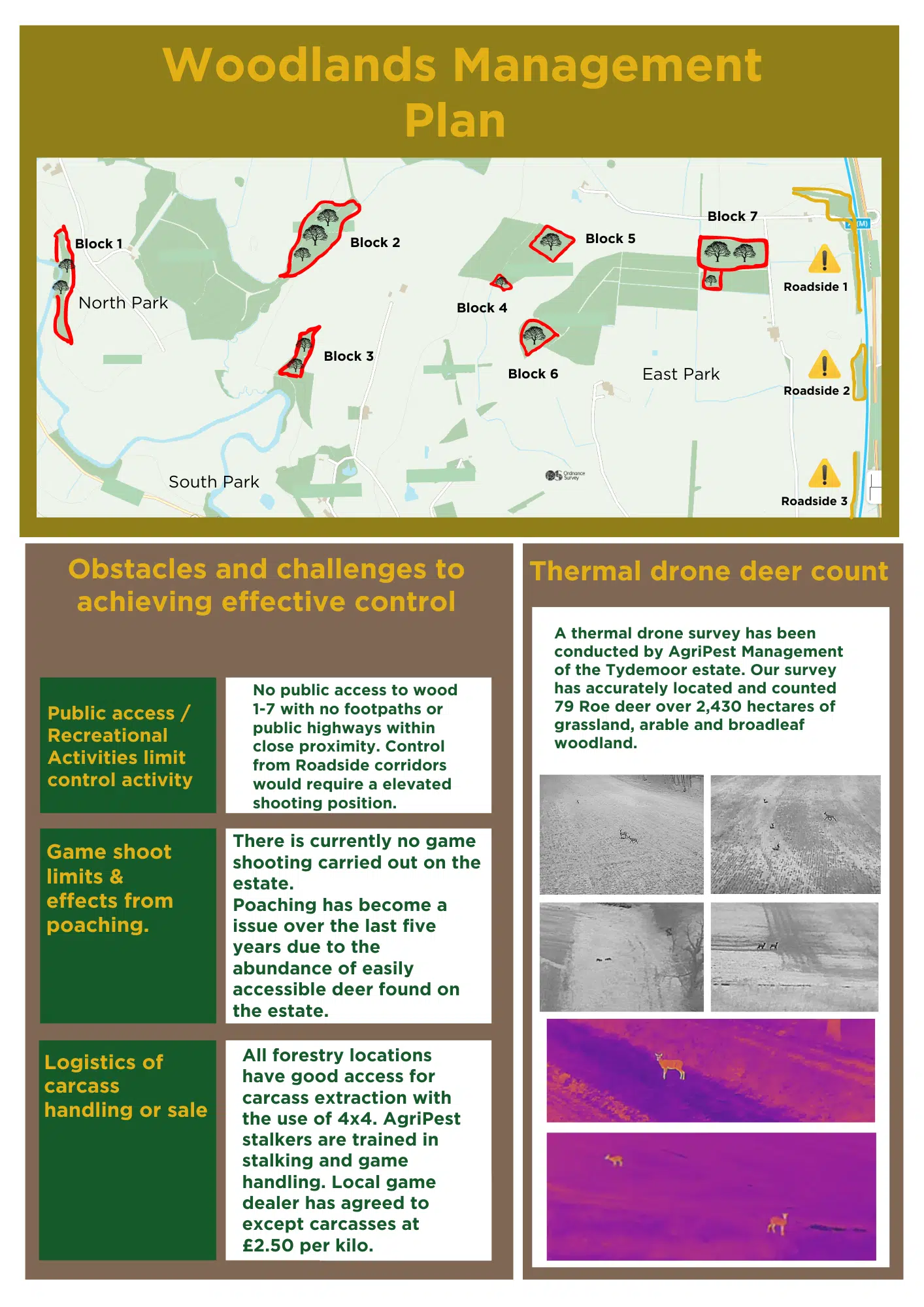


Wildlife population counts are vital for our environmental management, conservation and understanding ecological dynamics. AgriEcology use a combination of methods tailored to specific species, habitats and customers requirements, our team of researchers can gather accurate and meaningful data to support wildlife and ecosystem health.